
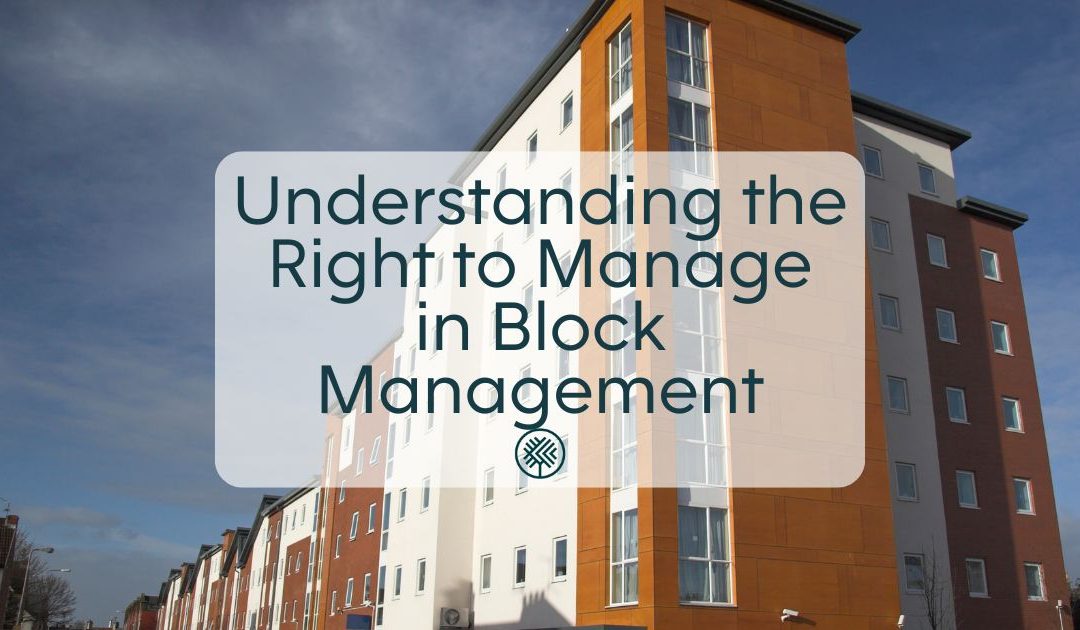
Managing a block of flats can be complex — from maintenance and insurance to service charges and legal obligations. Many leaseholders are unaware that they have a powerful legal right to take more control over how their building is managed. This is known as the Right to Manage (RTM).
At Oakfield Estate Agents, we help leaseholders and freeholders navigate this process with clarity and confidence. Here’s everything you need to know about what RTM means, how it works, and whether it might be the right choice for your block.
What is the Right to Manage?
The Right to Manage was introduced under the Commonhold and Leasehold Reform Act 2002. It gives leaseholders of flats the legal right to take over the management of their building from the freeholder — without having to prove poor management or misconduct.
Instead of relying on a landlord or external managing agent chosen by the freeholder, leaseholders can form an RTM company to take direct control of the block’s day-to-day management.
This includes decisions about:
-
Building maintenance and repairs
-
Cleaning and communal areas
-
Appointing managing agents
-
Setting and collecting service charges
-
Arranging insurance
It’s about empowerment — giving leaseholders a stronger say in how their home is looked after and how their money is spent.
Who Can Exercise the Right to Manage?
Not every building or group of leaseholders will qualify for RTM. To be eligible:
-
The building must be a self-contained block of flats.
-
At least two-thirds of the flats must be held by qualifying leaseholders (i.e., leases originally granted for more than 21 years).
-
At least half of those qualifying leaseholders must want to proceed with the RTM claim.
-
The block can’t be a local authority–owned property or have more than 25% of its floor space in commercial use.
If these conditions are met, the leaseholders can incorporate an RTM company and serve a formal notice on the freeholder to begin the process.
The Process: Step by Step
While the legislation gives leaseholders this right, the process itself must be handled carefully to avoid delays or disputes. Here’s a simplified overview:
-
Form an RTM Company – A limited company is set up specifically for managing the building.
-
Invite Other Leaseholders to Join – All qualifying leaseholders must be invited to participate before serving notice.
-
Serve the Notice of Claim – This formally notifies the freeholder (and any intermediate landlords) of the intention to acquire management rights.
-
Freeholder Response – The freeholder has the right to issue a counter-notice within a set time.
-
Transfer of Management – If successful, management functions are transferred to the RTM company after a handover period.
Throughout this process, professional guidance from an experienced managing agent or property lawyer is strongly recommended.
Benefits of Exercising RTM
Taking on the Right to Manage can bring many advantages for leaseholders:
-
Greater control over service charges, budgets, and contractors.
-
Improved transparency in financial and maintenance decisions.
-
Better value for money, as leaseholders can appoint agents or suppliers that suit their needs.
-
Empowerment and community involvement, fostering collaboration among residents.
However, RTM also carries responsibilities. Once in control, the RTM company must ensure the building complies with all relevant legislation, health and safety requirements, and lease obligations.
Common Challenges
While RTM can be empowering, it’s not always straightforward. Leaseholders often underestimate:
-
The administrative workload involved in running an RTM company.
-
The need for expert property management support, especially in compliance and maintenance planning.
-
Disputes that can arise with the freeholder, particularly over the validity of notices or service charge arrears.
That’s why many RTM companies choose to work with professional block managing agents — like Oakfield — who can handle the operational side while leaseholders retain strategic control.
How Oakfield Can Help
At Oakfield Estate Agents, we have extensive experience supporting RTM companies throughout the process — from the initial setup and legal notice stages to full management once control has been transferred.
Our block management services for RTM companies include:
-
Expert compliance and financial management
-
Transparent service charge budgeting and reporting
-
Contractor procurement and maintenance oversight
-
Health and safety and fire risk compliance
-
Day-to-day management and communication with residents
We combine professional expertise with personal service, ensuring leaseholders get the confidence and control they deserve without the administrative burden.
Final Thoughts from Oakfield
The Right to Manage offers leaseholders a real opportunity to shape the way their building is maintained and their money is managed. But success depends on careful planning, cooperation, and professional support.
At Oakfield, we believe in making block management fair, transparent, and efficient for everyone involved. Whether you’re just starting to explore RTM or ready to take the next step, our team can guide you through every stage — ensuring your building is managed to the highest standard and your community’s interests are protected.
To find out more about exercising the Right to Manage or to discuss professional management support for your block, contact Oakfield Estate Agents today, check out our contact details here.